
Radiator Lifespan: Repair or Replace? A UK Homeowner's Guide
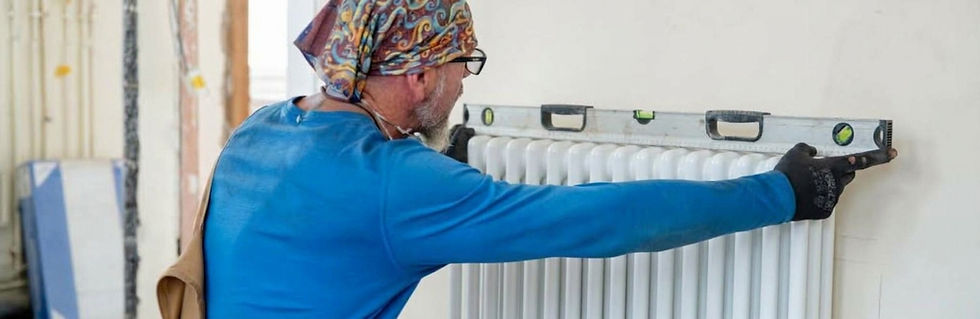
Most UK radiators last between 15 and 25 years, and cast iron can last 50 years or more. Age alone does not decide when to replace a radiator, because water quality, material and the type of fault matter more. This guide sets out typical lifespans, the warning signs of failure and how to choose between repairing, flushing and replacing.
How Long Do Radiators Last in the UK?
Most steel and aluminium radiators last 15 to 25 years, while cast iron radiators can last 50 years or more. Lifespan varies with the material, the build quality and how well the central heating system is maintained.
Radiator material | Typical lifespan | Main threat to lifespan |
Standard steel panel | 15 to 20 years | Internal corrosion from untreated water |
Steel column or designer steel | 20 to 25 years | Internal corrosion and sludge |
Aluminium | 20 years or more | Incompatible inhibitor or unsuitable water chemistry |
Cast iron | 50 years or more | Sludge build-up and seized valves |
Stainless steel | 20 years or more | Physical damage and poor installation |
These figures are guides rather than guarantees. A well-maintained steel radiator can outlast a neglected cast iron one.
What Affects How Long a Radiator Lasts?
The biggest factor is the quality of the water inside the central heating system. Untreated water makes steel and iron radiators corrode from the inside, producing black sludge and hydrogen gas.
Inhibitor use: A chemical inhibitor slows internal corrosion, and our guide explaining"why inhibitor should be used" covers how it protects steel and iron.
System type: Open-vented systems draw in oxygen, which speeds up corrosion, while sealed systems limit it.
Installation quality: Poorly fitted valves, over-tightened joints and unbalanced flow put extra strain on a radiator.
Physical damage: Knocks, standing water on bathroom floors and damp walls can speed up external rust.
What Are the Signs a Radiator Needs Replacing?
A radiator needs replacing when it leaks from the body, shows widespread rust or stays cold in patches after bleeding and flushing. One isolated symptom is often fixable, but several together usually mean the radiator has reached the end of its life.
Rust spots or bubbling paint, particularly along the bottom edge, which often points to corrosion working outwards from the inside
Leaks from the body or seams, because pinhole leaks and weeping welds cannot be repaired reliably
Persistent cold spots that remain after bleeding and flushing
Black or brown water drained from the radiator, which indicates advanced corrosion
Bleeding every few weeks, a sign of ongoing corrosion producing gas
Slow warm-up, where a radiator takes far longer than others to reach temperature
Should You Repair, Flush or Replace a Radiator?
Repair a radiator when the fault is at the valve or caused by trapped air, flush it when sludge is the cause, and replace it when the fault is in the radiator body. The location of the problem is the quickest guide.
Problem | Likely cause | Best action |
Drip at the valve or tail | Worn seal or loose nut | Repair. See our guide on how to fix a leaking radiator valve |
Cold at the top | Trapped air | Bleed the radiator |
Cold at the bottom | Sludge build-up | Flush the system |
Leak from the body or a seam | Corrosion breaking through | Replace |
Widespread rust and flaking | Advanced corrosion | Replace |
Over 20 years old with repeated faults | End of service life | Replace |
A system flush clears sludge and can restore heat to a blocked radiator, but a flush cannot reverse corrosion damage to the metal. If a repair costs a large share of a new radiator's price, or the same fault keeps returning, replacement is usually better value.
Do New Radiators Heat a Home Better Than Old Ones?
A new radiator does not convert energy more efficiently, because every radiator releases all the heat it receives, but a modern radiator can improve comfort and system performance. The gains come from output, water content and compatibility:
Output for its size: A modern double panel convector can deliver a higher output in the same footprint as an older single panel.
Faster response: Low water content designs, including aluminium, reach temperature more quickly.
Clean internals: A new radiator has no sludge, so full output is available from top to bottom.
Lower flow temperatures: A radiator's output at a Delta T of 30 is roughly half its rating at Delta T 50, which matters for low-temperature systems. Our air source heat pumps and radiators guide explains how to size for them.
Boiler pairing: A new boiler connected to sludged or undersized radiators cannot deliver its full benefit.
Do You Need to Replace All Your Radiators at Once?
No, you can replace radiators room by room. Start with the radiators that perform worst or sit in the most-used rooms, such as the living room, bedrooms and bathroom.
Choosing replacements with the same pipe centres and connection positions as the old radiators keeps the job simple. Fitting thermostatic radiator valves at the same time gives room-by-room control. Replacing radiators while the heating is off avoids losing warmth, and our guide on the best time to replace your radiators explains why the warmer months suit the job.
How Can You Make a Radiator Last Longer?
Add inhibitor, bleed radiators when they trap air and balance the system so no single radiator is overworked. Regular care can add years to a radiator's life.
Check inhibitor levels annually, and top up after any draining or repair work
Bleed when needed, when the top of a radiator feels cooler than the bottom
Balance the system, so flow is even and cold spots are avoided
Flush when the water runs black or persistent cold patches appear
Check compatibility for aluminium, because some inhibitors are unsuitable for it
Consider corrosion-resistant materials, like an aluminium radiator, that does not rust in the way steel does.
FAQs
Most steel and aluminium radiators last 15 to 25 years in a UK home, and cast iron radiators can last 50 years or more. Water quality, inhibitor use, and installation have the biggest impact.
Can a Radiator Last 30 Years?
Yes, a well-maintained radiator can last 30 years. Cast iron, stainless steel and aluminium radiators in inhibited, regularly serviced systems are the most likely to reach this age.
Is It Worth Repairing an Old Radiator?
Repair a radiator when the fault is a valve leak or trapped air. A radiator with body leaks, widespread rust or repeated failures is rarely worth repairing, because the corrosion will continue.
Do Aluminium Radiators Last Longer Than Steel?
Aluminium radiators resist internal rust better than steel, so they often last as long or longer with a compatible inhibitor. An unsuitable inhibitor can damage aluminium, so check the product label first.
Should I Replace My Radiators When I Fit a New Boiler?
Not automatically, but old radiators with sludge or corrosion can limit a new boiler's performance. A system flush and a check of each radiator's condition will show which units need replacing.


