
Statement Radiators: How to Turn a Radiator into a Design Feature
For years, radiators were something to hide, tucked behind furniture or painted to match the wall. That's changing. Statement radiators use bold shapes, colours and finishes to turn a functional necessity into a genuine focal point. With the right choice, your radiator can do just as much for a room's look as any piece of furniture.
In short: a statement radiator is one chosen deliberately for its visual impact, through shape, colour, finish or placement, rather than purely for heat output. Column radiators, designer verticals and bold RAL colours are among the easiest ways to achieve this in your home.
Why Radiators Deserve a Design-Led Approach
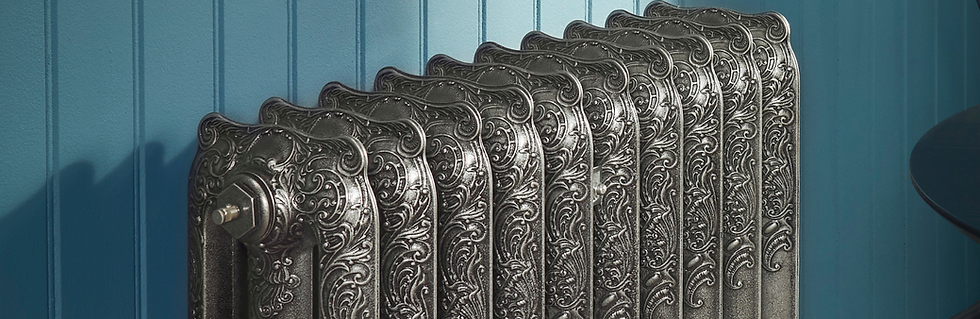
Most homes have between six and ten radiators, yet they're often the last thing anyone thinks about when planning a room. Given how much wall space a radiator occupies, particularly in a living room or hallway, it makes sense to treat it as part of the design scheme rather than an afterthought.
In our experience, customers who plan their radiator choice alongside their wider décor, rather than as a final practical purchase, end up with rooms that feel considerably more finished. A well-chosen radiator can genuinely become a feature, rather than something to be minimised.
Shape: The Easiest Way to Make a Statement

Shape is often the first thing people notice, and it's where a statement radiator earns its name.
Column Radiators bring a strong architectural presence and work particularly well in period properties, where their tubular profile echoes the character of the original room. For a more contemporary feel, Modern Designer Radiators offer sculptural, sometimes asymmetric shapes that behave more like wall art than heating.
Vertical radiators are another strong option for making an impact without eating into floor space, particularly in a narrow hallway or beside a staircase where a tall, slim shape draws the eye upward. Our guide to vertical and horizontal radiators covers the practical differences in more depth if you're weighing up orientation for a specific room.
Colour and Finish: Where the Real Transformation Happens

If shape sets the tone, colour and finish are where a statement radiator truly comes into its own. Most people default to white, but a radiator finished in Textured Anthracite, Aged Brass, or a bold RAL Colour can anchor a room's palette in the same way a piece of furniture or feature wall would.
Our full range of colours and finishes includes RAL Colours, special finishes and signature metallics, so there's genuine scope to match a radiator to existing brass fittings, dark woodwork, or a specific paint colour rather than settling for whatever comes as standard.
A few pairings that consistently work well:
Matt black or anthracite against pale, neutral walls, for a sharp, modern contrast
Aged Brass or Copper in period homes with existing brass ironmongery or lighting
Bold colour-matched finishes in a room where you want the radiator to blend into a feature wall rather than stand apart from it
Placement as a Design Decision
Where a radiator sits in a room affects how much design impact it has. A radiator centred beneath a window will always read as functional. One positioned as a feature on a blank wall, particularly in an open-plan space or a hallway, has room to stand out.
This is especially relevant in bathrooms, where a well-placed towel rail can double as both heating and a genuine styling moment. If you're planning a bathroom refresh, our bathroom heating guide has more on choosing between the two.
Statement Radiators in Period and Modern Homes Alike
In older UK properties with solid walls and higher ceilings, a statement radiator has more room to breathe visually, which is part of why column and cast-iron styles remain so popular in Victorian and Edwardian terraces. In a modern new build, the opposite approach often works better: a sleek, minimal designer radiator in a bold single colour, chosen to complement rather than compete with clean architectural lines.
Neither approach is more "correct" than the other. What matters is that the radiator is chosen with the room's existing character in mind, rather than picked as a like-for-like replacement without much thought.
Getting Started
If you're planning to make a radiator the focal point of a room, it helps to start with the wall it will sit on rather than the radiator itself. Consider what else is on that wall, what colours and materials already exist nearby, and how much visual weight you actually want the radiator to carry.
From there, browsing by style and colour and finish separately, rather than searching for a single statement radiator, tends to produce better results, since the impact comes from the combination of shape and finish rather than either alone.
FAQs
Can any radiator be a design feature, or does it need to be a specific type?
Any radiator can contribute to a room's look, but column, designer and vertical styles tend to make the strongest statement, since their shape is more distinctive than a standard flat-fronted panel.
Will a dark or bold-coloured radiator heat a room as effectively as a white one?
Colour and finish don't meaningfully affect heat output. Output is determined by the radiator's size, type and the system's Delta T, not its colour, so you can choose a bold finish without a heating performance trade-off.
Do statement radiators work in small rooms, or only larger spaces?
They work well in small rooms too. A tall, slim vertical radiator in a bold finish can make a strong statement in a compact bathroom or hallway without taking up the floor space a horizontal radiator would need.
What's the easiest first step if I want my radiator to feel more like a design choice?
Start by choosing the finish before the model. Matching or contrasting the radiator against the wall it sits on has a bigger visual impact than the specific shape of the radiator itself.


