
10 Energy-Saving Heating Upgrades for 2026
Updated: Jun 25

If your heating bills still feel higher than they should, your system is probably working harder than it needs to. The good news is that some of the most effective energy-saving heating upgrades cost very little, and several can be done this weekend without calling a tradesperson. This guide runs through ten practical improvements in rough order of effort and investment, so you can start where it makes sense for your home and budget.
The single most impactful step most UK homeowners can take is fitting thermostatic radiator valves on every radiator and pairing them with a smart thermostat. But there are several free or low-cost fixes worth making first.
1. Bleed Your Radiators

If a radiator feels warm at the bottom but cool or cold across the top, trapped air is preventing hot water from circulating through the full panel. Bleeding releases that air, restores full heat output, and reduces how long your boiler needs to run to reach temperature.
It takes around five minutes per radiator, requires nothing more than a radiator key and a cloth, and costs nothing. It is worth doing at the start of each heating season, before the colder months arrive. If you have not done it before, our simple step-by-step guide on how to bleed a radiator walks you through the process.
2. Fit Radiator Reflector Panel

Radiator reflector panels, sometimes called radiator foil, sit behind wall-mounted radiators and reflect heat into the room rather than letting it conduct through the wall behind. In older UK properties with solid, uninsulated walls, a significant proportion of heat can be lost this way. Panels typically cost just a few pounds per radiator, take minutes to fit, and require no tools. The Energy Saving Trust recognises reflector foil as a useful low-cost measure for homes where cavity or external wall insulation is not practical. For a Victorian terrace or an Edwardian semi, this is one of the easiest wins available.
3. Balance Your Central Heating System

An unbalanced heating system means some radiators heat up quickly while others barely warm through, which forces your boiler to run for longer to compensate. Balancing your system involves adjusting the lockshield valve on each radiator so that hot water flows evenly around the whole system, with all radiators reaching temperature at roughly the same time.
It is a free DIY job that requires a few tools and a methodical approach. Done properly, it reduces uneven room temperatures and cuts wasted energy across the system.
4. Upgrade to Thermostatic Radiator Valves (TRVs)

If your radiators still have fixed manual valves, replacing them with thermostatic radiator valves (TRVs) is one of the best-value energy efficiency upgrades available. A TRV senses the air temperature in the room and automatically reduces flow to the radiator once the set temperature is reached, which means you stop heating rooms that are already warm and your boiler runs for shorter periods overall.
The Energy Saving Trust recognises TRVs as a cost-effective measure for most UK homes with wet central heating systems. They fit most standard radiator connections without requiring pipework changes, and a full set for a typical three-bedroom home can be fitted in a few hours.
5. Install a Smart Thermostat

A smart thermostat lets you control your heating remotely via an app, set schedules by day and time, and in many cases, adjust automatically based on whether anyone is home. Systems such as Hive, Tado, and Google Nest are widely available and can be installed by a plumber or a confident DIYer.
The Energy Saving Trust estimates that a well-programmed smart thermostat can save a typical UK household between £70 and £150 per year, though actual savings depend on your current setup, home size, and how the system is configured. The key benefit is precision: you only heat what you need, when you need it.
6. Replace Undersized Radiators

A radiator that is too small for its room will never fully heat the space, regardless of how high the thermostat is set. Your boiler simply runs longer trying to compensate. If a room consistently feels cold with the heating on, and bleeding and balancing have not resolved it, the radiator is almost certainly undersized.
The correct approach is to calculate the required heat output in BTUs (British Thermal Units) for the room based on its dimensions, ceiling height, insulation level, and number of windows or external walls. Our BTU calculator handles this in a couple of minutes. In our experience, undersized radiators in rear kitchen extensions and converted loft rooms are among the most common hidden causes of high heating bills.
Browse our full radiator range → https://www.radiatorsdirect.co.uk/ranges/radiators
7. Swap Single-Panel Radiators for Double-Panel Models

Standard single-panel radiators (Type 11) produce less heat output for the same wall footprint as a double-panel, double-convector model (Type 22). If your home has older single-panel radiators, switching to a double-panel equivalent of the same dimensions can significantly increase heat output without touching the pipework.
For rooms where the radiator is too small but wall space is limited, this is often the most practical solution. The pipe centres remain the same on most standard replacements, keeping installation straightforward. We sell a range of modern Type 11, 21 and 22 designer radiators.
8. Switch to Aluminium Radiators

Aluminium radiators heat up significantly faster than steel or cast iron equivalents because aluminium conducts heat more quickly and the material is lighter, requiring less energy to raise to temperature. They also cool down faster once the heating switches off, which means they respond well to thermostat changes and produce less residual heat waste.
This responsiveness makes aluminium radiators a particularly good match for modern combi boilers and smart heating controls, where the heating runs in shorter, more precise cycles rather than long, slow heating periods. They are also lighter to handle, which makes installation easier.
9. Replace Old Radiators with Modern Equivalents
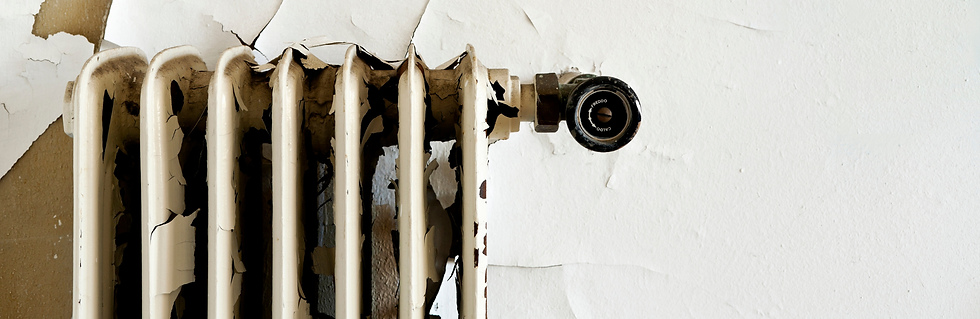
Radiators do not last forever. Older steel panel radiators can develop internal corrosion over time, which reduces their heat output even when the system is otherwise functioning well. If your radiators are original to a property built more than twenty to thirty years ago, they are likely operating below their rated output and could be wasting energy your boiler is working hard to produce.
Modern steel column radiators are manufactured to tighter tolerances, resist corrosion better, and are available in a wide range of sizes, so you can right-size each room properly rather than replacing like-for-like. Swapping out an old radiator is also a straightforward job for a plumber, with pipe centres on most standard replacements matching existing connections.
10. Plan for Heat Pump-Compatible Radiators

Air source and ground source heat pumps run most efficiently at lower flow temperatures, typically around 45°C to 55°C, compared to a conventional gas boiler, which runs at 70°C to 80°C. Radiators sized for higher flow temperatures may not produce adequate heat output at these lower temperatures, which is one of the main reasons heat pump installations sometimes underperform.
If you are planning to replace radiators now and are considering a heat pump in the next five to ten years, specifying radiators with output ratings suitable for low-temperature systems means you will not need to replace them again when the time comes. Aluminium radiators are highly suitable for heat pumps because they have exceptional thermal conductivity, allowing them to heat up rapidly and transmit warmth into rooms efficiently. Because heat pumps typically supply water at lower temperatures than traditional gas boilers, this high thermal output is essential to keep a home comfortable.
FAQ
Q: What is the cheapest energy-saving heating upgrade I can make?
Bleeding your radiators costs nothing and takes about five minutes per radiator. If any of your radiators are cold at the top, bleeding them can immediately restore output and reduce how long your boiler runs.
Q: Do thermostatic radiator valves really reduce heating bills?
Yes, when fitted and used correctly. TRVs reduce flow to a radiator once a room reaches its set temperature, which means your boiler is not running continuously to heat rooms that are already warm. The Energy Saving Trust recognises TRVs as a cost-effective upgrade for homes with wet central heating systems. The savings are most noticeable in homes that previously relied on a single whole-house thermostat.
Q: Are aluminium radiators more energy efficient than steel ones?
Aluminium radiators produce the same heat output per watt as a comparable steel radiator, so the efficiency is equivalent in raw terms. The practical difference is response time: aluminium heats up and cools down much faster, which means it works better with smart controls and short heating cycles. In homes with modern combi boilers and programmable thermostats, this faster response tends to mean less wasted heat overall.
Q: What does "heat pump compatible" mean for radiators?
A heat pump compatible radiator is sized to deliver sufficient heat output at lower flow temperatures, around 45°C to 55°C, rather than the 70°C to 80°C which is typical of a gas boiler. Because heat pumps run most efficiently at these lower temperatures, using correctly sized radiators is essential to getting good performance from the system. In practice, this usually means fitting radiators with a larger surface area. However, rather than taking up more wall length, this can often be achieved by switching to deeper, multi-panel models (such as double or triple-convector radiators) that project slightly further into the room but take up no more width or height.
Q: How do I know if my radiators are undersized?
If a room consistently feels cold while the heating is running, and bleeding and balancing have not resolved the problem, undersizing is the most likely cause. Use a BTU calculator to work out the required output for the room based on its dimensions, ceiling height, insulation quality, and the number of external walls and windows. If your current radiator falls short of that figure, replacing it with a correctly sized model will make a noticeable difference.


